
Toss
Beat them to the source.
No water, no mosquito babies. ☑ Done.
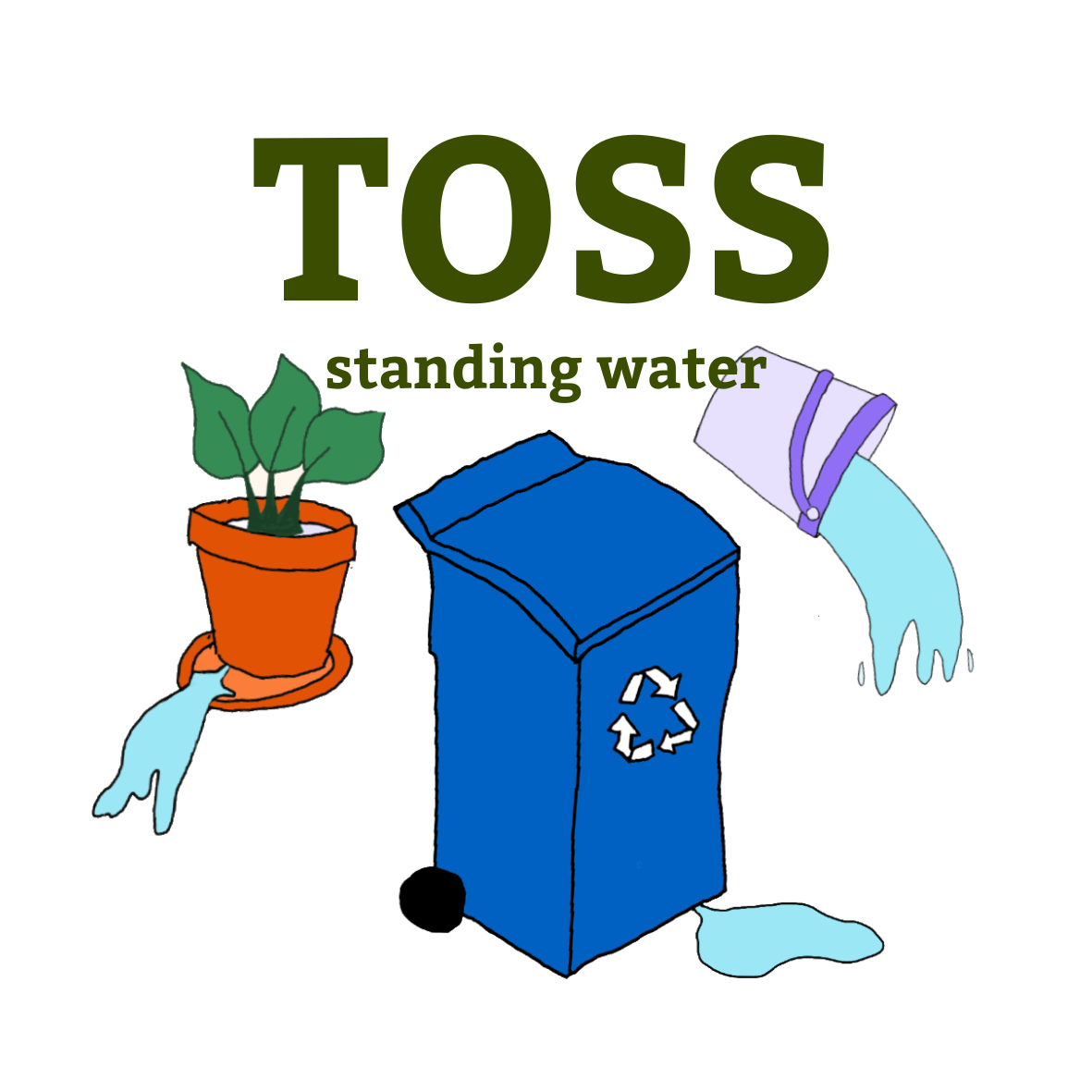
Why toss standing water? Mosquitoes don’t need much. A bottle cap of water is enough to breed hundreds. And it takes 5-7 days for an egg to mature into an adult.
The good news: most standing water in and around your home can simply be dumped, drained, or removed — no products, no cost, no expertise required. It’s the single most effective thing you can do, and it takes minutes.
Tossing works best as part of a system. It cuts off the next generation at the source. Treating → handles the water you can’t toss. Trapping → deals with the adults already out there.
The biggest culprit
Trash & Recycling Bins
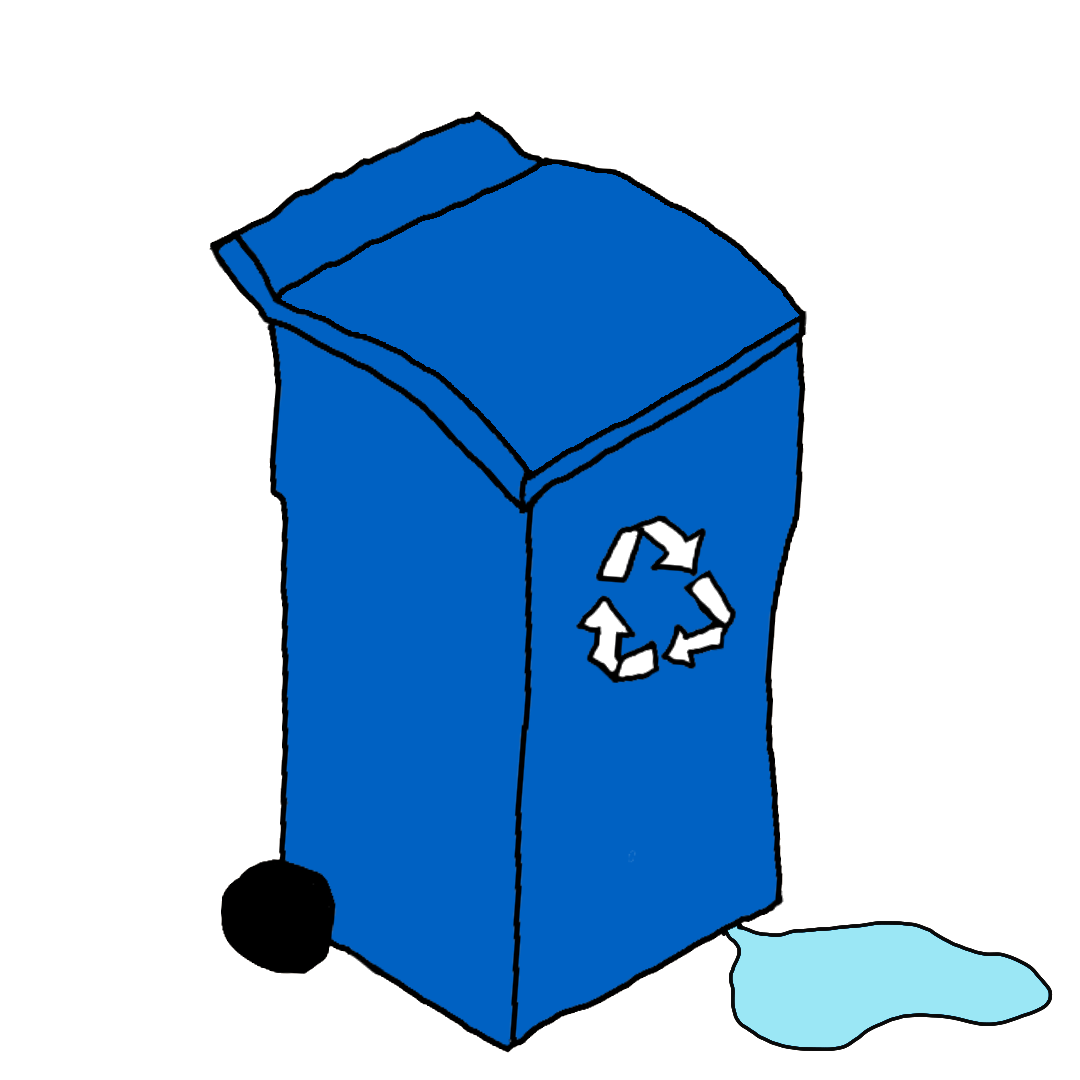
Trash cans are one of the biggest culprits on the block.
This one surprises people every time: trash cans are one of the most significant mosquito breeding grounds in urban neighborhoods — and most people never think to check them.
Here’s the problem: lids crack, warp, and go missing. Bin bodies get holes punched through them from rough handling. Water gets in, sits in the bottom, and becomes a mosquito nursery that gets wheeled right back to your house every week.
A few things to do right now:
Your neighbors’ bins
Your neighbors’ bins matter too. A cracked lid two doors down undermines everyone’s effort on the block.
DC will replace or repair bins with rodent damage for free — and you can request a bulk inspection for the whole block at once through 311. We recommend coordinating with your Block Captain.
Other culprits
Once a week, do a slow walk around your property with fresh eyes:
Look above the water too
One of the mosquitoes we’re up against in DC — the tiger mosquito — doesn’t lay its eggs in the water. It lays them on the inner wall of a container, just above the waterline. So even when you don’t see any larvae wriggling around, the eggs can already be there, waiting for the next rain to raise the water and hatch them.
They’re easy to mistake for dirt. Look just above the water level in birdbaths, buckets, saucers, anything that holds water. If you spot a dark, grainy band that looks like a smudge, look closer. Once you know the shape, you can pick them out with the naked eye. Scrub them off and refresh the water, and you’ve stopped the next generation before it starts.
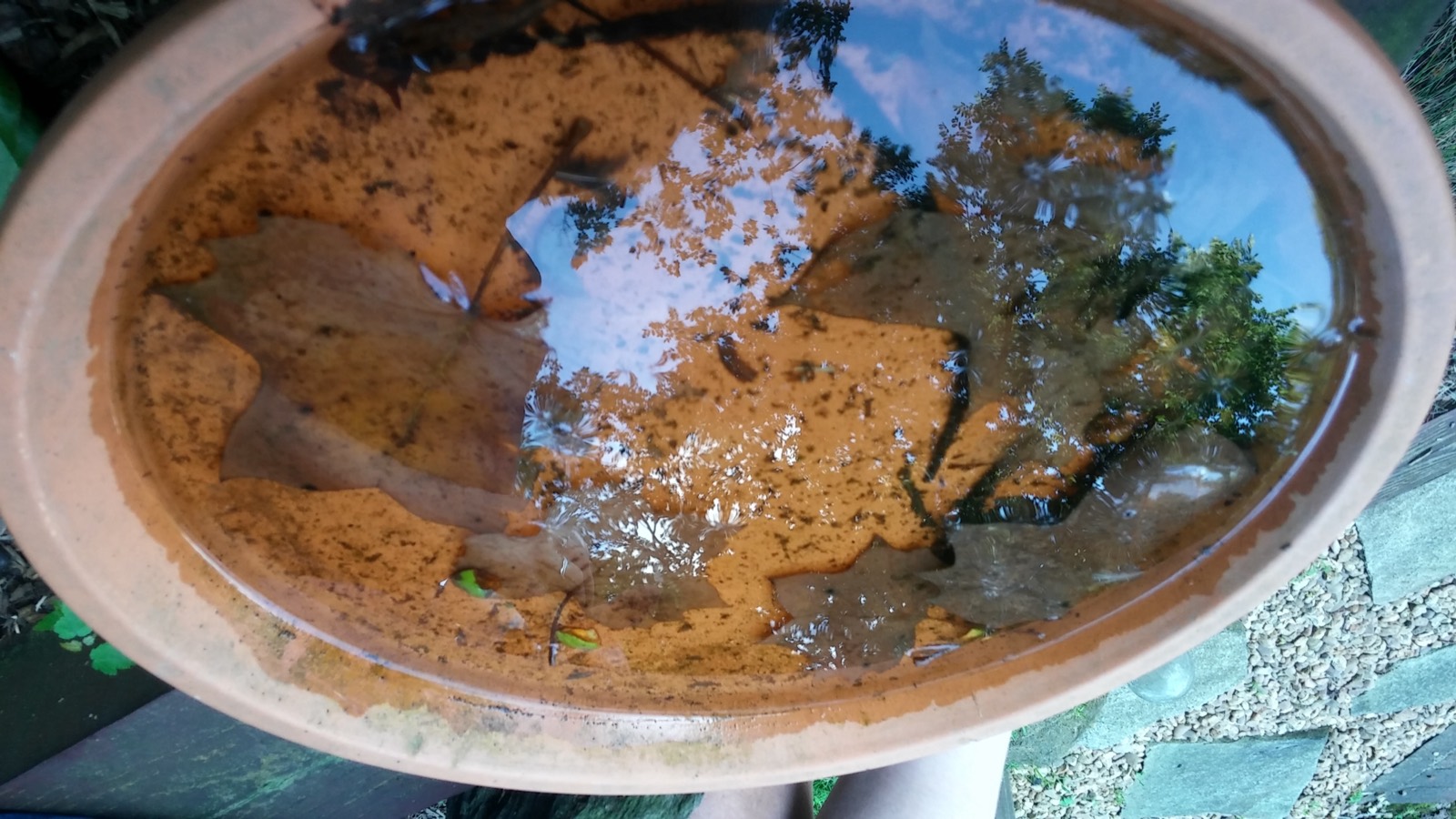
Images provided by Dr. Leontsini, Johns Hopkins Bloomberg School of Public Health.