
Season report · August 2026
Mid-season status report.
Where things stand since March, what neighbors are telling us, and what we still don’t know.
Published August 1, 2026. Live numbers are always on the impact page.
The short version
Neighbors are telling us this summer felt different, and two r/washingtondc threads say the same thing. We don’t know how much of that is us. It’s been drier than usual, though nowhere near record dry, and it’s also been unusually hot, which cuts the other way.
So we’re measuring: researchers are counting mosquitoes across DC neighborhoods at the end of August, and they’ll choose sites from portal data on August 17. Your yard needs to be in the portal by August 16 to be part of the comparison.
Where things stand
In March, Itty Bitty was one post on a Capitol Hill listserv. Since then neighbors have claimed 280 blocks across all eight wards, learned to spot the containers breeding mosquitoes around their yards, and spent the summer tossing and treating them. They’ve ordered 7,000 traps through the community site, 1,252 Mosquitaires and 5,748 GATs, and built who knows how many buckets of doom.
Two posts went up on r/washingtondc this month asking where the city’s mosquitoes went and whether there are way fewer this year. On one, the top comment pointed at Itty Bitty and plenty of neighbors agreed. We’ve been hearing the same thing directly, and there’s more of it on the impact page.
This has changed my life! I have been sitting out on my porch (even at dusk), playing with my kids in the yard, and watering my plants without any bites! Previously I couldn’t even spray my bug spray without being swarmed, and now I only use it in the evenings. I used to say that mosquitoes were the only thing that would get me to leave DC, and now I can stay forever. My traps aren’t even super full, so it must be the group effort.
Not everyone is seeing it
One of our block captains has had the catch basins and Pepco vaults on her block treated. Several neighbors have told her they feel less plagued this year. But she’s struggled to organize the block, people in her household are still getting eaten, and she suspects there’s standing water in the yards of neighbors she hasn’t connected with yet. She bought two GATs and a Mosquitaire mostly to demonstrate them, and they haven’t convinced anyone.
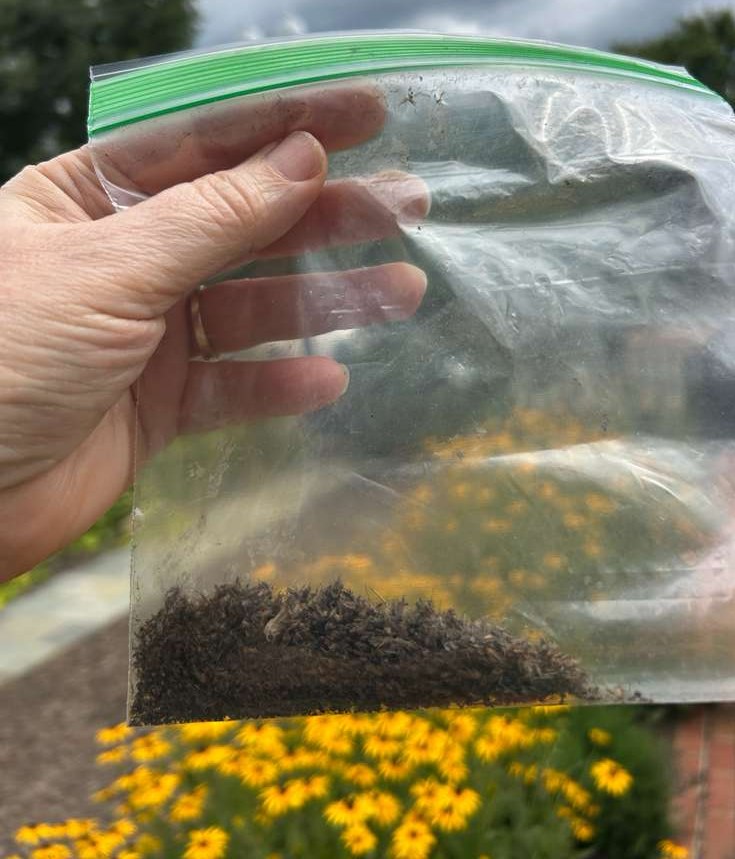
I do not think anyone is going to invest that kind of money without more proof of effectiveness. I show off the ziplock of dead mosquitoes from the Mosquitaire, when I can, it’s a LOT of mosquito carcasses. Impossible, however, to know whether they represent 1% or 50% or 90% of the mosquitos passing through.
She’s also just learned, along with a lot of us, that her GATs have been set up with the sticky card stopping short of the dome edge. Here’s the correct setup. Some share of the 5,748 GATs out there may have been underperforming all summer, and we don’t know how many or by how much.
Why we do it this way
We don’t spray. Spraying kills the adults, along with pollinators and everything else in the yard. It doesn’t touch the larvae sitting in containers, so a new batch emerges within days. And mosquitoes build up a tolerance, so each round works a little worse than the last. More on why we don’t spray.
Source reduction does the heavy lifting. Tossing and treating standing water handles most of it. If they can’t breed, they can’t survive. Traps are for the last few yards, and they earn it: every female caught cuts off 100 to 400 more in the next generation.
More neighbors trying beats a few being thorough. Every yard holds some of the breeding habitat within flight range of your patio, so what matters is how many are being worked on at all. Nobody does this perfectly. We don’t. Do what you can, and get your neighbors doing what they can.
And it has to be the block. Asian tiger mosquitoes are among the worst we have here: aggressive, invasive, biting all day rather than at dusk. They’re also weak fliers, staying within about 300 feet of where they hatched and rarely crossing busy roads. The one biting you came from standing water a few doors down, which means your neighbors are the only people who can solve your mosquito problem, and you’re the only one who can solve theirs.
Mike, in Trinidad, has buckets of doom front and back, GATs front and back, a Mosquitaire in the back, traps he maintains at his immediate neighbors’ houses, and several more neighbors he’s talked into joining.
As for my backyard - it has been a night and day difference from last year. We have enjoyed multiple evenings eating dinner or just relaxing virtually mosquito free. I’ve heard from participating neighbors that they have noticed a difference too.
What else is going on
The weather cut both ways. It’s been drier than normal, and dry means fewer containers filling up, everywhere in the city at once. But it’s also been the 5th warmest start to summer in 155 years, and heat speeds mosquitoes up. We’ve been sitting right in the range where tiger mosquito populations grow fastest.
Catch basins and Pepco vaults were on our list from the start, and they’re still one of the biggest breeding sources in the city. WUSA9 went and looked. They’re also the part no household can fix on its own, and we don’t know how many got reported or treated this season. That variation probably explains some of why one block’s summer looked different from the next.
Bee Safe has also been releasing sterile male mosquitoes weekly since this spring, in about 25 yards across Northwest DC and Maryland. It’s a tricky but ecologically sound approach that requires continuous release throughout the season. The research behind it is fascinating and we have a lot of questions about how it performs at the residential scale. We’re wishing those blocks well and would love to hear how it went! But given how little ground tiger mosquitoes cover, those 25 yards can’t account for what people are reporting across the city.
Several things happened at once here this summer and we can’t yet separate them. We want to know what mattered and how much.
So we’re measuring
At the end of August, researchers at a local university are running mosquito counts in DC neighborhoods. We’ll sample a minimum of 18 sites chosen from portal data, comparing blocks where neighbors organized against blocks that haven’t started. We make that selection on August 17, so a yard needs to be on the map by August 16 to be in the running. The protocol is still being worked out and we’ll share it once it’s settled.
A second effort is further out. We’re partnering with a research team at another university on a citizen science version, using a phone-based tool that identifies and counts what a trap caught. Getting it working on DC’s species is part of the project. If it comes together, neighbors could sample far more than 18 sites themselves later this fall.
And DC Health has committed to publishing standing water complaints and resolutions on Open Data by the end of the season, which is how we’ll find out about the catch basins.
Whatever the counts show goes on the impact page, including if they show we were wrong.
The portal
Counts alone just tell you how many mosquitoes were in a yard. Set against a record of what that block did, they tell you whether any of it worked.
We know which blocks are signed up. Until a few days ago we had no record of how many neighbors were actually taking part, or what any of them did, because there was nowhere to put it. That record is logged in the portal, which we opened to block captains a week ago and to everyone else on Thursday. There are already 191 homes and 530 traps on the map. A great start, but we have a ways to go!
We pick the sites on August 17, so you should aim to add your yard by August 16.
Make an account, drop a pin wherever you have a trap or standing water you’re treating, and you’re done. Most neighbors finish in a couple of minutes.