Summer is long, and this one has been a lot. Thank you for sticking with it and for tuning in this whole time. We spent the season trial and erroring our way through, piloting all kinds of tools and trying to be as helpful as we could without being annoying about it. Some worked, some didn't, some stopped fitting once we grew past them. You stayed with us anyway, and I hope you got to reap the benefits and enjoy more time outside, despite it being a million degrees out.
We're at the last stretch now, and it's the part that shapes next year.
Research partnership
In about three weeks, researchers from the University of Maryland will count the mosquitoes in our neighborhood to find out whether our work made a difference. Right now, nobody can say yet whether the light mosquito season many of us experienced was our work, the January freeze, the dry summer, or all three.
What we learn will shape where we focus next year, what we recommend to the city, and what we can point to when we ask funders to back this work in more parts of DC. Please make sure your home and block are accurately represented in the portal to make this study as informative as possible.
Where we're measuring
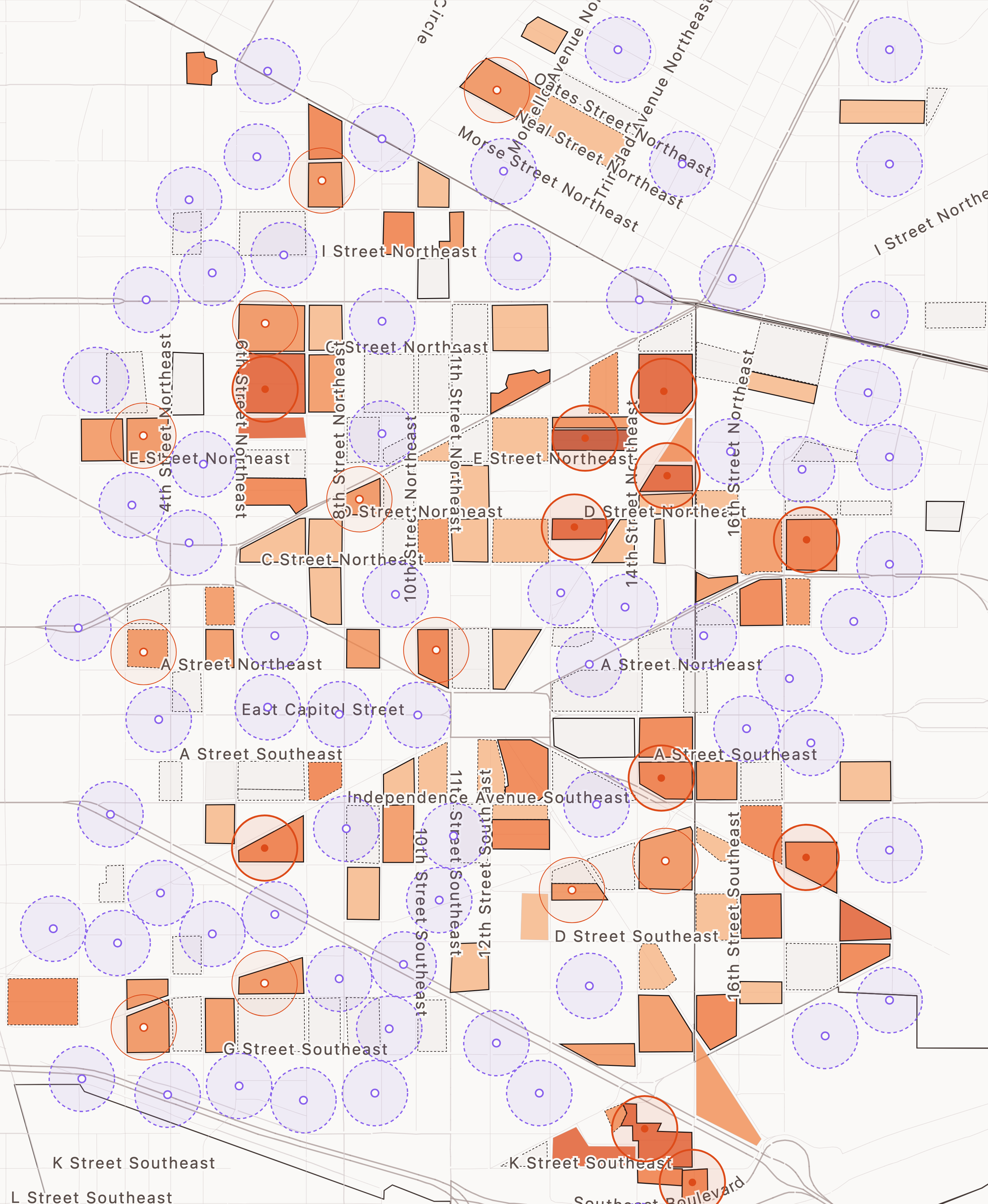
We'll be placing surveillance traps in 25 sites that fall within blocks that had high, medium or low/zero trapping and source reduction activity. This fall's sampling is limited to Capitol Hill. The surveillance team is coming from College Park and needs to reach every trap daily, so we kept the footprint tight. We're planning for broader sampling across the city next season.
The map below shows Capitol Hill by block, using portal data. Orange blocks had medium to high Itty Bitty activity this season, purple rings are low activity, and the lab's traps need to go on both. A subset of the orange blocks will be sampled, and if yours is one of them, I'll be in touch next week.